
About Us
A student lab where ideas become real technology projects
Lab of Experimental Ideas
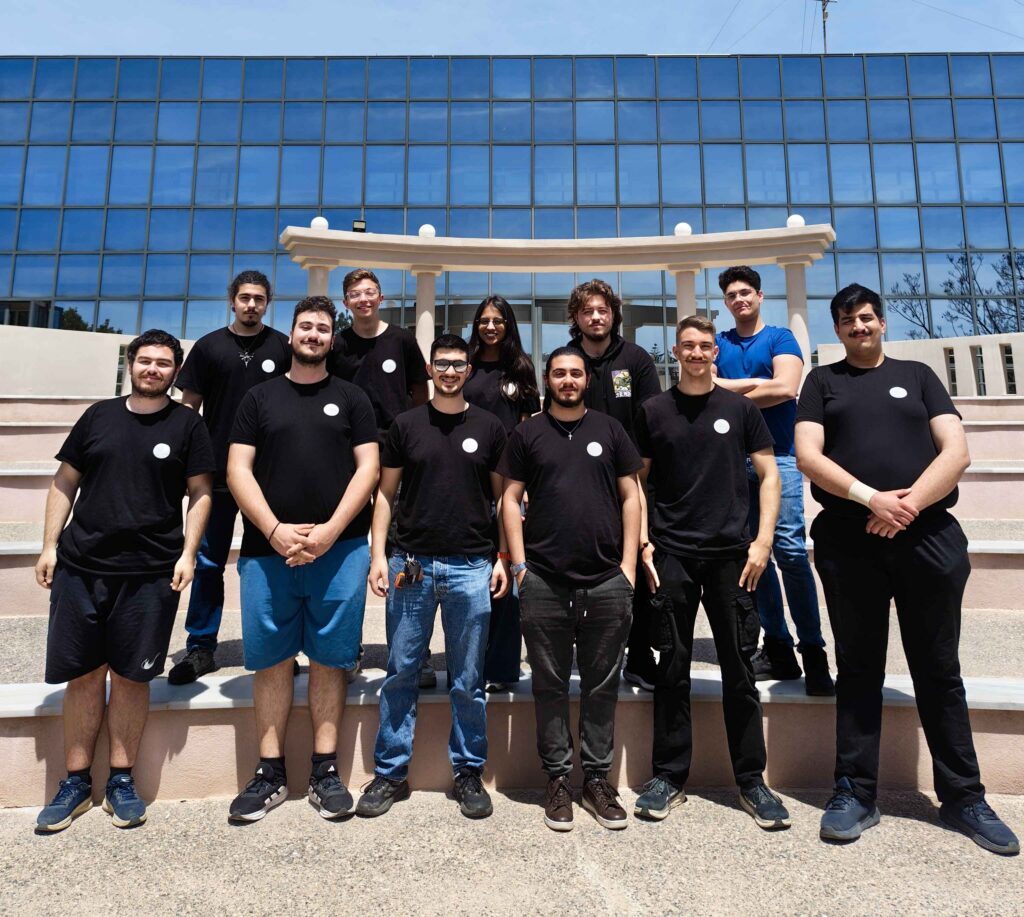
Epictetus is a student driven laboratory and team based in the Department of Electronic Engineering at the Hellenic Mediterranean University in Chania, Greece. It brings together students who share a strong interest in technology, experimentation, and innovation, creating a space where ideas can develop into real engineering projects.
The team focuses on practical work across electronics, embedded systems, robotics, and software development. Through hands on experimentation and collaboration, members design, prototype, and build systems that help them develop real technical skills beyond theoretical coursework.
Epictetus operates as an open and collaborative environment where students of all levels can participate, learn, and contribute. By working together on projects, members strengthen not only their technical abilities but also teamwork, problem solving, and communication skills, preparing them for real world engineering challenges.
The laboratory is supervised by Dr. Ioannis Vardiampasis and also contributes to the wider academic community. The team supports laboratory activities, develops tools and experimental systems for educational use, and encourages collaboration between students across different academic years.
Through curiosity, creativity, and continuous experimentation, Epictetus continues to grow as a dynamic space where learning, innovation, and practical engineering come together.
Our Mission
Hands-on Learning
Turning theory into real systems through electronics, embedded development, and practical experimentation.
Innovation
Designing and building creative engineering solutions across robotics, software, and hardware systems.
Collaboration
A collaborative lab environment where students of all levels learn, share knowledge, and build together.
Our work in practice
🔬 Microscope ACD
A low-cost DIY microscope system designed for electronics laboratories, combining a custom optical setup with OCR-based recognition of electronic components. The system uses image processing with OpenCV and Tesseract to identify IC markings, resistor color codes, and automatically retrieve relevant datasheets, helping students analyze components more efficiently during lab work.
⏱️ Transistor Clock
A 12-hour digital clock constructed entirely from discrete electronic components, without the use of integrated logic ICs. The system is built using transistors, diodes, resistors, capacitors, and a crystal oscillator to generate stable timing signals, demonstrating core principles of digital logic, timing circuits, and hardware-level system design.
🚪 DorLok
A smart door locking system developed as part of the HMU Innohub innovation competition, designed to convert a conventional door lock into an intelligent access control system. The solution focuses on practical integration, maintaining the external structure of the lock while adding secure and programmable functionality.
⌨️ Macropad
A compact programmable 3×3 keypad designed to improve productivity by automating repetitive tasks. Each key can be configured to execute custom commands, shortcuts, or workflows, making it useful for development, creative tools, and everyday computer use. The system combines embedded hardware with customizable software to create a flexible human input device.
Want to join the team?
No prior experience is required — just the motivation to learn, collaborate, and create. The team is waiting for you.